How can gamification support us to traverse through life’s uncertainties?
Noah Heathcote
Digital SLP Essay
Please Watch Video
(if not done so already)
Introduction
This essay looks to consider the multiple potentialities of the word uncertainty within my SLP project. It seems to be prevalent with many aspects of the project. Although the word may not seem positive, I have discovered many possibilities that can arise out of it being so and of considering it as a viewpoint for exploration. This essay won’t cover the full scope of the project but will have its focus mainly on the field of gamification, to challenge and to consider how important it is, not only to my practise but to the future of theatre-making and many things in between. To do this I will be considering such fields as animism, play, participant engagement, myself, editing, spirituality, identity, festivals and liquid modernity. Although they may all come across as seemingly separate fields, in this case I argue that they are all working together within my project, interacting to a certain degree to engage with the idea of uncertainty.

Gamification
It is said that the term gamification was coined in 2003 by computer scientist Nick Pelling although it’s thought to have been around long before that. More recently, Jane McGonigal, a game programmer, was one of the first to get a PHD in Gamification. Gamification is about applying game-like strategies to the actual world, and it has been used in marketing. For example, when we consider the idea of getting a reward i.e., having a Starbucks stamp card, so that you get your 10th coffee free, this strategy tends to make buying products feel more fun and engaging for the customers. This essay looks at it in a different way and so does McGonigal. She experienced a serious injury which resulted in a potentially life threatening concussion which meant that she couldn’t get up, she couldn’t focus for more than five minutes, then one day she said to herself, “I’m either going to kill myself or turn this into a game”. (McGonigal, 2016, p. 2) She consequently made her own real-life into a game. She says:
Being gameful means bringing the psychological strengths you naturally display when you play games–such as optimism, creativity, courage, and determination–to your real life. It means having the curiosity and openness to play with different strategies to discover what works best. It means building up the resilience to tackle tougher and tougher challenges with greater and greater success” (McGonigal, 2016, p. 2)
The term gameful extends gamification as a concept, but as McGonigal says, she uses it as a tactic that we can embed into our own reality, an idea I will touch more on later.
Below is the logo I created for the project; it attempts to capture this connection between a game like reality and our actuality.
-09_edited_.png)
Animism
Please watch the video below:
The question-mark has been a reflection and metaphor for the whole project. It reflects the sense of uncertainty, but also a space and invitation to discover and explore the internal landscapes of ourselves and the world around us. Before I found McGonigal’s work I believed I had actually invented the word gameful, but after some research, I realised that was not the case. I ‘coined’ it as being at the point where mindfulness meets gaming. I then found the term already had existed and as a result, I feel a stronger sense of a bond with Jane as a maker, thinker and gamer as she greatly deepens my practice.
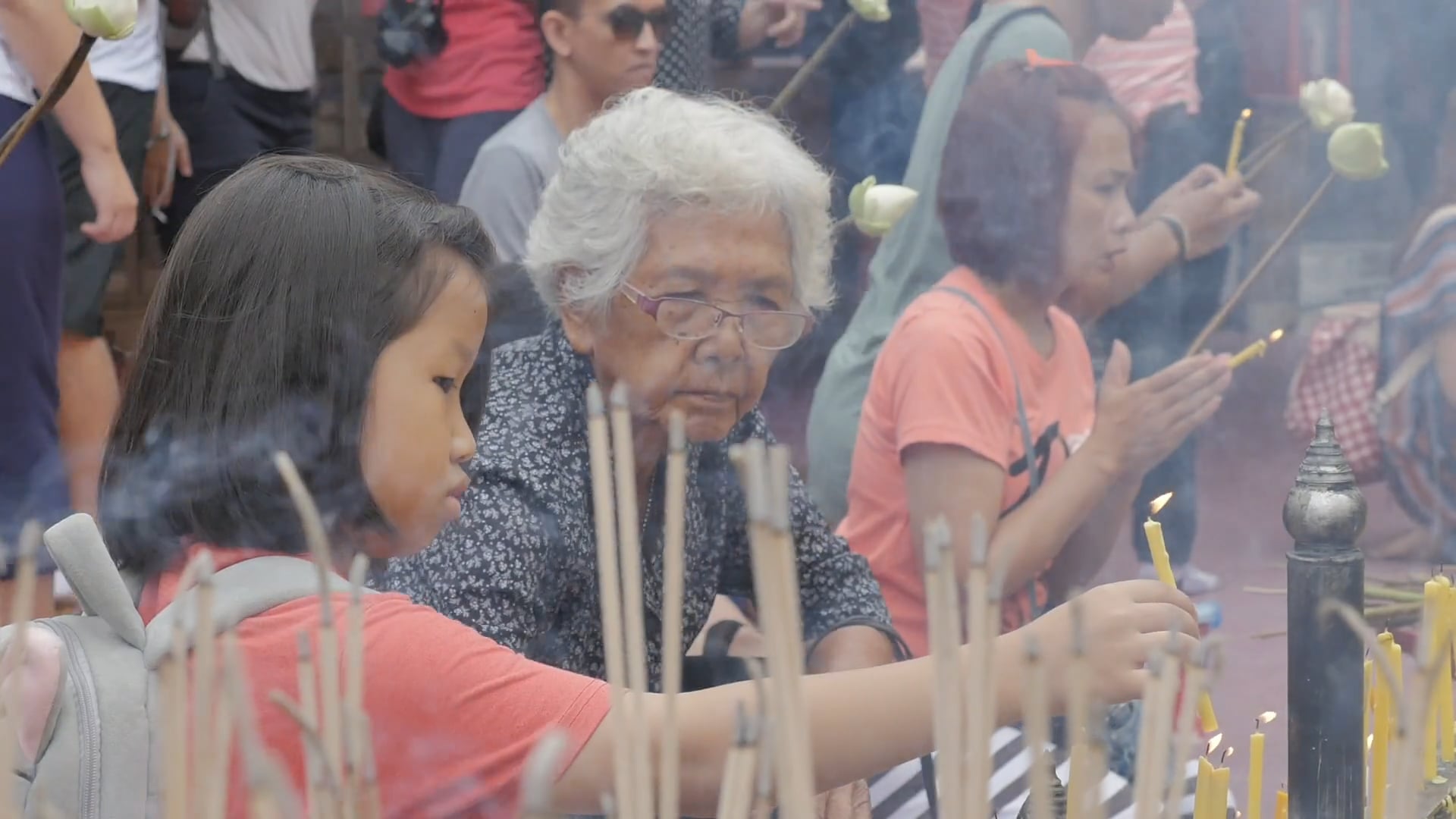
Film Maker and theorist Jennifer Waldrep finishes the video above by saying “What do you believe is a force for good in your life?” and I think this is what the idea of Animism brings to this project.Visual artist and curator Anselm Franke speaks about how Animism was used to define many cultural studies and practices where the line between physical and spiritual was blurred. Anthropologists have used the term since the 19th century, but as a belief it goes back to being one of the oldest religions to date. It’s such a broad field, so it’s hard to consider all aspects of it, but for this essay I consider that it adds theoretical grounding to the intangible elements of this project that may be deemed hard to grasp or uncertain in its positionality or meaning, because this project sits between the digital world and the physical world, the soul and the body. I suggest it acts as the glue that allows me to link it all together. Franke also says that:
Animism usually is the belief in spirits, or as the attribution of conscious life to nature and inanimate objects. Any such definition raises questions concerning the correct boundary between human-made signs and non-human things, and also between living and dead matter, between a subject with a conscious interiority, and mere objects who lack such quality. (Franke, 2020)
This can be seen throughout my film, one example of this would be the shell. It is used at first just as an object or symbol but towards the end it gives burst to an energetic beam of light that connects the earth to the sky, as a portal between Gabriel’s spirit self and his physical self. You could consider this as being the transistor between all parts of his psyche. However, it finishes with the conclusion of it actually being a digital version of his self in a game. All these various versions of Gabriel opens up the question of identity and how he defines himself, and who he perceives as genuine or merely a clone becomes intangibly interconnected with who he is. This sense of animism arises, and so a connection to the world around him and himself is achieved.
Play
One of the things that we can consider from both these ideas of gamification and animism is that the words have an interplay with the word play. Please look at some of my notes below to notice how they connect

Sutton-Smith, B. (2001). The Ambiguity of Play.


Sicart, M. (2017). Play Matters.
Sutton firstly directly links play to ambiguity and Animism by comparing play as being an essential part of life, comparing life to games of chance. Sicart then contextualises play as being like tensions between creation and destruction. Furthermore, Sicart is suggesting that play is wasted time, in the sense of play being so in the moment that time doesn’t matter. This is focused on exploring play beyond our initial modern conception of it, being limited to areas such as a playground or playing video games, was initially where the thinking originated. In year two of the DATE course, with Gareth White, we do a unit called Play, Performance, Technology, Life. The learning from this module has come to fruition within this project, where with the tensions and boundaries of world events, my positionality of coming home, working fully online, are all rubbing up against each other, causing a friction. Although all these elements playing together have been difficult and uncertain, it has given the project depth and meaning that wouldn’t have been possible without it. These disruptive times have re-moulded my inquiry and awakened my methodology to play within the uncertainties around us.
Personal & Grief
Here, I consider how gamification has made a space for expression for the actor/participant and close friend of mine, Daniel. After the tragic loss of his older brother when he was just 13 years old. Working with such personal themes of course, comes with risks, and the danger of triggering a negative reaction was a worry. Ethically, I needed to find a way to supply a safely held space for him to express himself and to also portray the role effectively. One of my considerations is explained well by Amanda Stuart Fisher in her book Ethics of Care, when she explores how we can redirect our attention onto physical means of communication, she argues:
it can be employed in art sessions to mediate a form of communication with other people. This can be understood as the sensory attunement and aesthetic sensibility of the artistic process enabling ‘total communication’ 212 (Fisher, 2020, p. 212)
I attempted to employ ‘total communication’ by going beyond words and working largely on physicality and giving in-the-moment instructions. On reflection, with Daniel this dynamic allowed for a space where it was acceptable to play, and acceptable to feel uncertain without feeling the need to use verbal language to express. Here is a short audio clip of him briefly discussing his thoughts.

Editing
Here, I will suggest the impact of gamification in relevance to the uncertainties that ‘failure’ brings to my methodology. When editing my film there were points when things went wrong, but I think it is how you react to these failures that is of the most importance. I worked between Premiere Pro and After Effects depending on what I had to do. On one occasion, after I applied a glow around the body of the actor in After Effects, for some reason it said the clip was unable to download normally, so I screen-recorded my footage instead and then uploaded into Premiere. This corrupted my footage as it wasn’t correctly downloaded and made it all glitchy. Instead of starting again I decided to embed this failure into the movie itself.
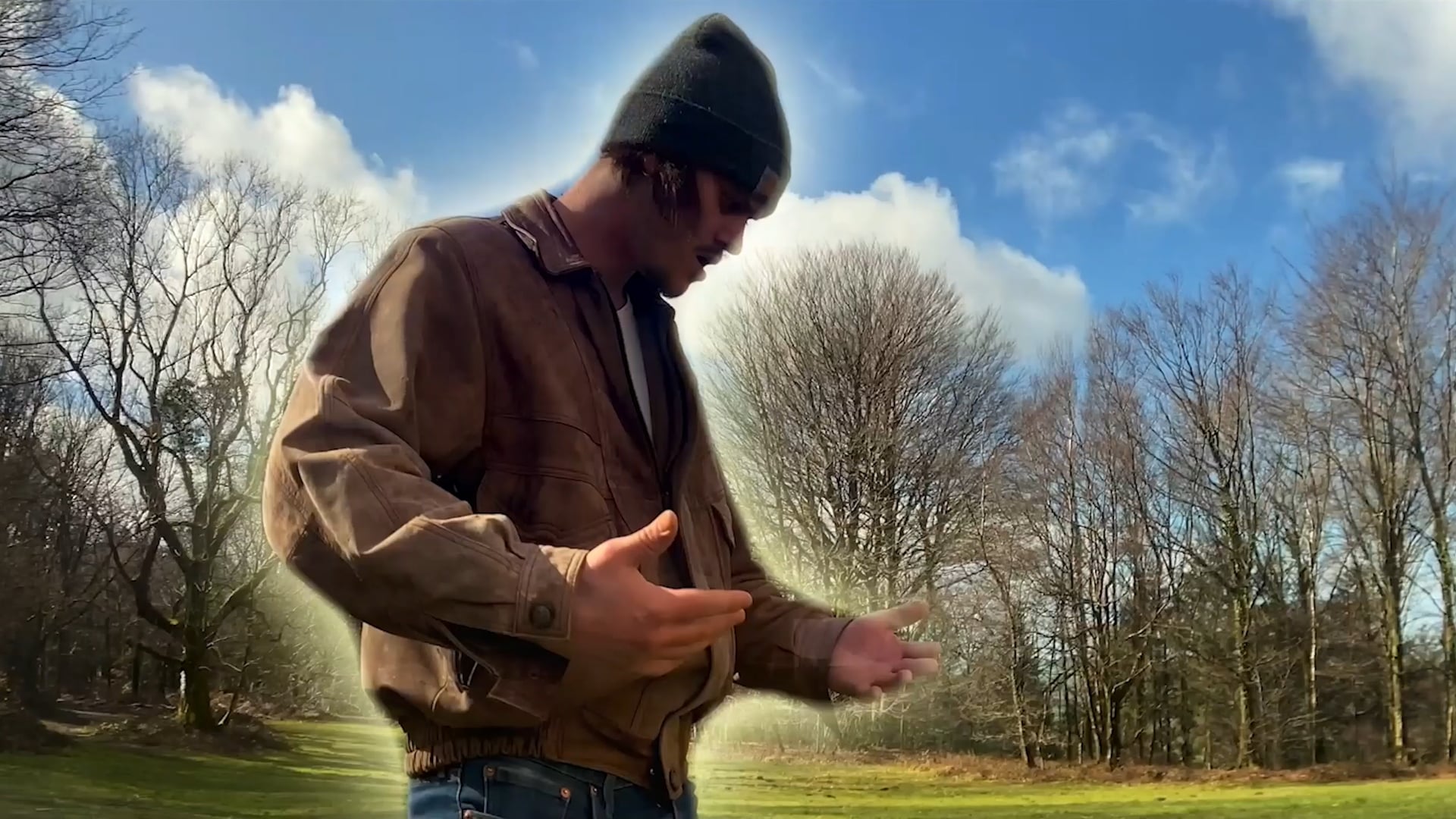
This before and after shows how the piece's failures can actually be its greatest successes. This worked especially well when considering the piece is about the merging with the digital realm, and lends itself to the idea of being in a matrix that is falling apart. In The Art of Failure an Essay on the Pain of Playing Video Games. Jesper Juul discusses gamification and failure by saying:
When game structures are applied directly to activities with tangible consequences, the plausible deniability of failure may disappear: if our performance is seen as genuine measure of who we are, then we can no longer claim that our failure was unimportant. The freedom found in regular games can only be preserved if we're given room to experiment and the freedom to fail
(Juul, 2013, p. 122)
This statement suggests that this freedom to fail, like playing games without fear can be applied to various structures in our day-to-day activities. It is this mindset that gave me the perspective to see and embrace failure within my work and to enjoy the uncertainties that come with exploring new software. Here is a quick action shot of me playing around on Adobe After Effects that shows this process of trial and error
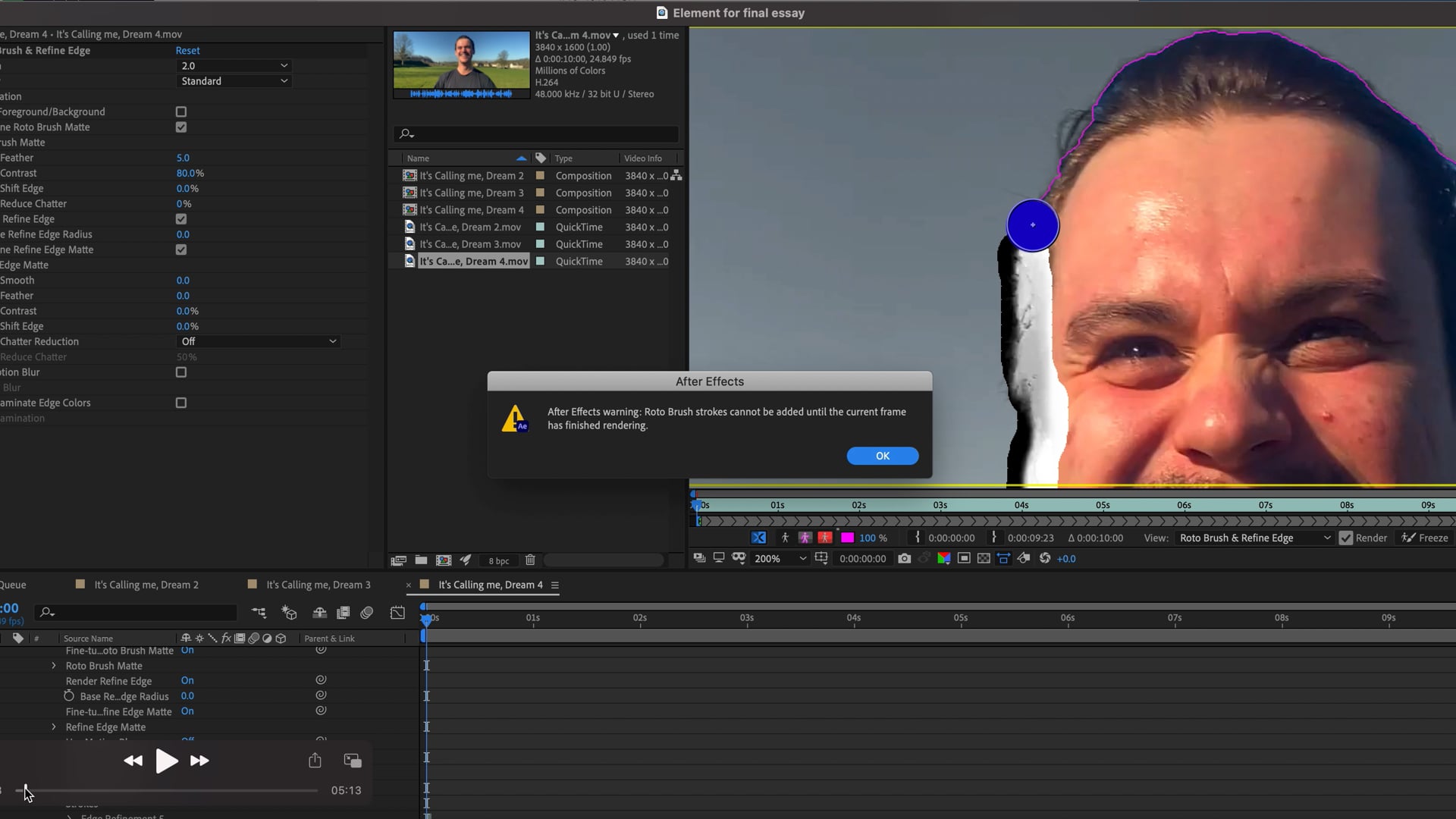
The dream sequence was probably one of the most stressful parts of the film to edit, partly because I didn’t know exactly what I was doing, but after spending 12 hrs on it in one day, I eventually got the hang of it. This just demonstrates the power and significance of playing, by trial and error, uncertainty + time = certainty… or at least a finished product.
Post-Traumatic Growth
It is important to consider and look closely at my own positionality and the journey that I have been on over the last 6 months. To do this I will look upon McGonigal’s theory on post-traumatic growth. She claims there’s a way to experience post-traumatic growth without the trauma. Please look at my highlighted notes from her book below.
McGonigal, J. (2016). Super Better: A revolutionary Approach to Getting Stronger, Happier, Braver and More Resilient.
These considerations shaped my project but more importantly it gave me a sense of validation to grow, to progress and to view things differently. I also must consider the relation between this and Daniel’s actual trauma for I'm not comparing them, it is simply the need for a sense of growth and journeying amongst uncertainty that I needed to attain.


Journey
The project is a reflection of my own spiritual journey since coming back home, which I will touch on shortly. One of the ways that I attained a sense of journey through the project was by doing reflection check-ins with myself after I felt like I had learnt something new and inspiring. This was done by doing a 2-minute video reflection and then going on a walk to process what I had learnt in a physical sense, by the action of walking. Here is a short montage of my reflections.

For this argument, it is less about what I'm saying and more about the action of speaking to the camera and saying the words out loud over time. It was these interactions with myself that helped me inform and navigate where I was at emotionally and generally within the project. It’s also important to consider that it was these moments of exploration and looking back on it from an eagle perspective that has informed what my inquiry really is; a want to grow, and to re-imagine my limitations through these uncertain times.

Spirituality & Identity
I’ve briefly mentioned the notion of a spiritual journey not only within myself but also as one of the key themes of the film. I go back to the term animism as it refers to us and nature as one whole living being. It is this understanding that I found initiated a sense uncertainty of self and into a comfort to how self has be considered throughout the film. I look to philosopher Zeena Schrek when she speaks about animism and identity, she says
Shapeshifting requires the ability to transcend your attachments, in particular your ego attachments to identity and who you are. If you can get over your attachment to labelling yourself and your cherishing of your identity, you can be virtually anybody. You can slip in and out of shells, even different animals forms or deity forms (Schreck, 2015, p. 14)
Schreck considers identity as being fluid in its meaning, suggesting that you can find multiple selves that feed into what I consider as the psyche of all variants of myself that make a sense of wholeness. I use this to consider how Gabriel’s physical self and spiritual self, come together in the film. However, I have gone a step further and brought in the idea of a digital self too, to re-inform what I said earlier, these three together form a hybrid identity that I believe reflects upon the world and our current merging with technology.

Festivals and Gamification
Now I am going to compare festivals to video games to demonstrate the power that these other worlds can have on social and political structures. From my own experience of festivals, I have found them deeply emotive and political spaces for reflecting upon the world, because of how detached they are from our everyday lives. Anthropologist David Picard wrote a book called Festivals, Tourism and Social Change, he says:
“Festivals, while containing worlds, also open out and spill over into ‘outside’ worlds and their multiple dimensions can only be understood by taking into consideration the different realities of these outside worlds” 4 (Picard & Robinson, 2006, p. 4)
He suggests festivals as being their own worlds, but speaks about a spill over to the outside world. I have also experienced this myself where because you’re removed from the real world, it allows you to have a different perspective of the world. That means festivals become safe places to question our reality, to think outside the box. Ian Bogust a video game designer, says something similar,
“Video games can also disrupt and change fundamental attitudes and beliefs about the world, leading to potentially significant long-term social change”. (Bogust, 2007, p. 9)
These themes of social change are very much represented with my attention to exploring and disrupting the barrier between worlds, this can be seen in my film where he comes out of an epiphany sequence at the end of the game and into his actual world, he then gets up and walks out the door, this shows his sense of awe and wonder in the game has seeped into his real world. This is very similar to how festivals can impact the real world, and therefore this validates and informs. Turning uncertainty into clarity from the means of entering and then leaving of worlds.
Temporary Spaces & Sally Mackey
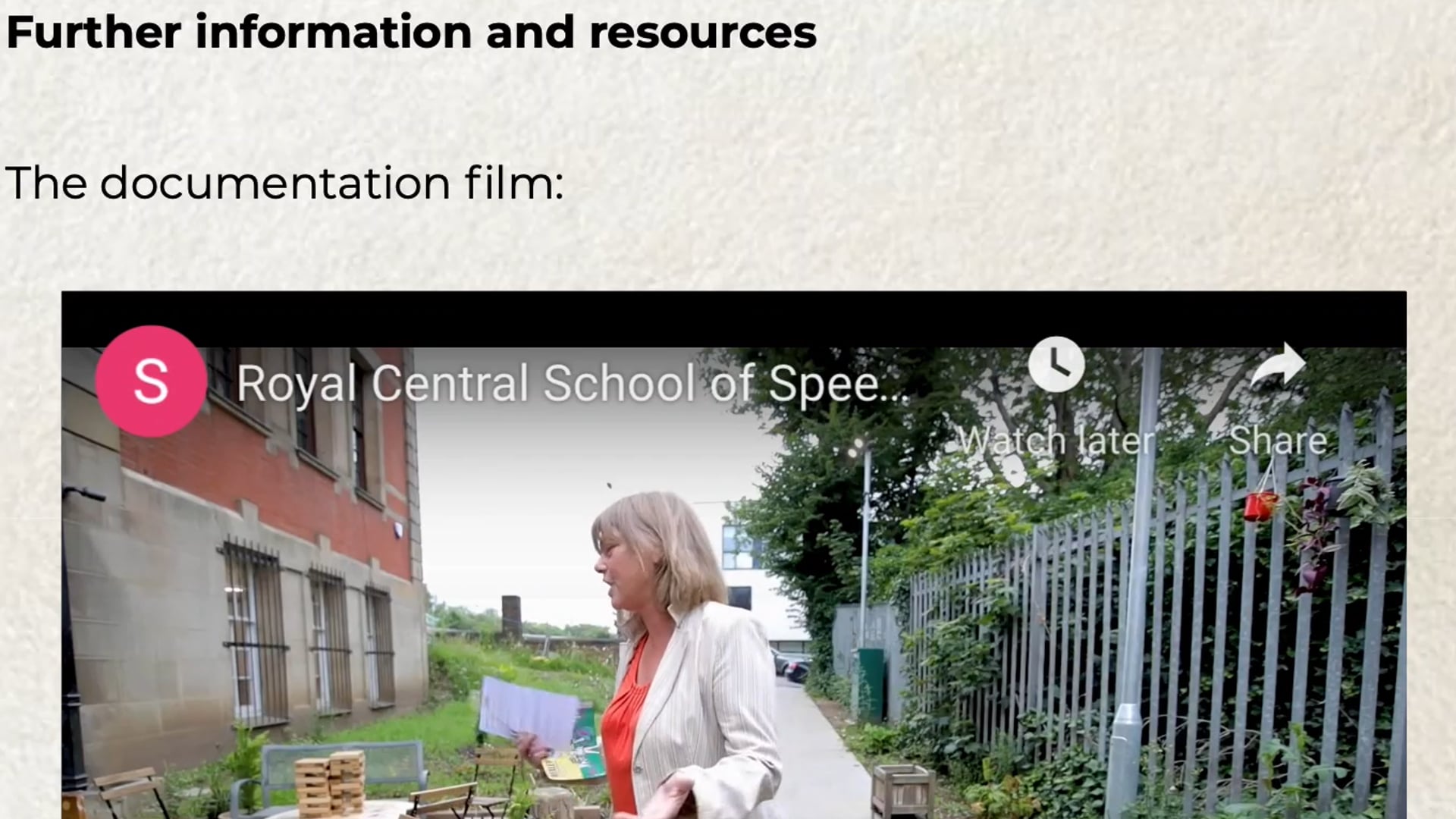
The video above was from the performing places project for my directed project in first year, which was an immersive world called Parbexia, situated in an old abandoned library in Bexley, it was other-worldy to say the least. That project not only informs my own journey into performance and place but it also talks about temporary spaces. Professor Sally Mackey is of course renowned for inventing the DATE course but also, she has been a big inspiration to my practice. When speaking about temporary spaces she says:
A focus upon ‘performance’ in provisionally inhabited places responds to a growing emphasis on temporary place as iconic of our times. Place might be considered, now, as a meaningful way-station, as pause, or as momentary location. This ‘place’ might be described as part of travelling up, across and along (Mackey, 2012, p. 5)
Informing this essay’s ideas of uncertainty, temporary spaces in her practice attempts to be places of comfort with meaning and value. She also articulates as if travelling and journeying are ways to walk with who you are, which I consider as saying ‘I'm just being myself’ but it implies a sense of moving forward and growing with it. She also refers to temporary place as being iconic for the times which is definitely true now more than ever when we consider the pandemic. This feeling of temporary space was also the value of Gabriel being in a game, similarly to festivals and there potential power for change.

Liquid Modernity
To deepen my idea of the power of uncertainty in this essay, I came across a term that correlates with many of the different ways I've been considering it. That term is called liquid modernity and was coined by sociologist Zygmunt Bauman. In its most basic form, it’s the term used for describing the art of living in uncertainty and modern times. He speaks about how we seem to be living more and more in a time of uncertainty. I consider this especially relevant with the pandemic of course. Bauman says:

He suggests that we wear our garments and understandings of the world and ourselves as ‘untied’ and that we should be able to take them off ‘effortlessly’ and this draws me to consider this idea of moving with the times and not letting it strain us too much, Laura Segre, a student who did a Ted Talk on The Phobia of Liquid Modernity evolves the subject as having positive potentials, please watch the video from 3.27 secs

“We do have an alternative, even multiple. Innovate. Adapt. The only way to stay afloat in a world of trickling creativity is to become a source.” (Segre, 2020)
This really resonated with me and my pedagogy. Personally, since the pandemic I have felt like my work excelled and became a lot stronger, I find that there is a freedom to uncertainty and you can see that in my work. My resonance with ambiguity and the search for multiple meanings, multiple selves, is facilitated by uncertainty; this word allows for these seemingly separate areas of my project to be interconnected.
Reflections
I now consider, and go back to where it all began. This project started from a want and a need to explore the word loss, and a search for acceptance. I felt an unknowing sense of loss and was uncertain of what it was from. My close friend Daniel lost his brother, my sister had a miscarriage, but nothing obvious or directly happening to me, as such. I call it a secondhand loss as it hasn’t felt direct, but the impact is still there, I didn’t feel I could talk about it as there have been people who have experienced far worse. Then I realised we have all felt the weight of living through a pandemic, we all have gone through a huge loss, from loved ones to social life, impacting mental health to motivation. I argue that all is valid, all is worthy of expression. You can see this on the page I invite you to scan through, to see all the different ways loss has been considered and expressed.
Conclusion
I conclude by suggesting that these other spaces, these temporary environments, give us a chance to reflect upon the world by being open minded to wider perspectives. I’ve realised that looking at our own external reality in new ways, brings us closer together, with ourselves, the world and the people in it. Although I’m not sure where this work will lead, I’m learning to embrace life’s uncertainties and to be willing to adapt, create and evolve by using a Gamification mindset to progress through our liquid modern times.
Bibliography
Bauman, Z. (2021). AZ Quotes. Retrieved from Wind and Fly: https://www.azquotes.com/quote/966771> [Accessed 31 May 20]
Bogust, I. (2007). Persuasive Games: The Expressive Power of Videogames. Cambridge: The MIT Press.
Fisher, A. S. (2020). Performing Care. Manchester: Manchester University Press.
Franke, A. (2020, November). Episode 1: A Report on Migrating Souls in Museums and Moving Pictures. Retrieved from E-flux: https://animism.e-flux.com/episode1/ > [Accessed 15 May 21]
Juul, J. (2013). The Art of Failure. London: The MIT Press.
Mackey, S. (2012). Cuckoos in the Nest: Perfroming Place, Artists and Exess. London: Applied Theatre Research Volume 1. https://core.ac.uk/download/pdf/18328222.pdf > [Accessed 19 May 21]
McGonigal, J. (2016). Super Better: A revolutionary Approach to Getting Stronger, Happier, Braver and More Resilient. London: Harper Collins.
Picard, D., & Robinson, M. (2006). Festivals, Tourism and Social
Change. Toronto: Channel View Publications.
Schreck, Z. (2015). A collection of interviews, essays, quotes and images by Zeena Schreck. New York: Heinzfeller Nileisist.
Segre, L. (2020). The Phobia of Liquid Modernity. Retrieved from Youtube: https://www.youtube.com/watch?v=7CcfTrH2EqM > [Accessed 23 May 21]
Sicart, M. (2017). Play Matters. London: MIT Press.
Sutton-Smith, B. (2001). The Ambiguity of Play. Massachusetts: Harvard University Press .